
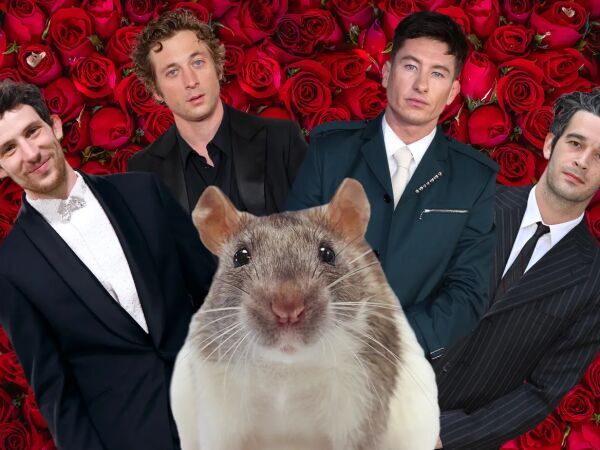
Are You Starting To Think The Rat From Flushed Away is Attractive?: The Rise of The 'Rodent Boyfriend'
Juno breaks down the bizarre trend of the 'Rat Men' taking over the internet.
As engineering students, we’re told that the first thing to do after reading an exam question is to write down the initial conditions. They don’t look like much, but they decide everything that happens next. Whether it’s how much load a structure can bear or what material a wall should use, those first numbers quietly set the limits of what’s possible. Life works the same way. Before we ever make a choice, someone has already set our boundary conditions — the circumstances that shape how far we can go.
There is so much we silently inherit rather than earn: where we’re born, the colour of our skin, the accents we grow up with. It’s important to celebrate hard work and talent, but realistically, effort only matters when everyone starts from the same line, and most of the world doesn’t. From school funding to healthcare, from visa access to clean air, inequality is engineered into our systems long before anyone begins to compete.
My parents came from rural India, not empty-handed, but with habits, hopes and ways of living that didn’t always fit the Australian soil they landed on. They grew up where winters arrived wrapped in fog so thick it swallowed the fields whole, where evenings meant sitting by the fire with a handful of peanuts and the hum of family stories. By summer, those same fields shimmered gold at harvest, the air heavy with dust, sweat and celebration. Their world was full of banter, chores and prayers, but also enclosed. They knew they were luckier than most — educated, supported, part of something that could catch them if they fell. That awareness was their privilege, and they chose to make something of it.
They carried that privilege across oceans, trading the certainty of belonging for the uncertainty of beginning again. Their degrees didn’t translate, their names were mispronounced, but they refused to let that undo them. They turned their discipline, persistence and faith into a new kind of wealth, the chance for their children to choose differently.
Even now, my parents can’t sit still. My mum creates chores when she’s meant to be resting; my dad fixes things that don’t need fixing. They come from a life where slowing down could cost you something. I used to see it as stubbornness; now I see it as legacy. They built a life sturdy enough for me to pause inside it. The ability to rest, to put my ambitions before obligation, is a privilege, the kind they recognised early, transformed, and passed on. And now it’s my turn to do the same: to use what I have to create space for others to do the same.

We treat self-awareness like a currency. “I know I’m privileged” buys a soft landing for the conscience. But guilt is hollow. It feeds no one, heals nothing. Awareness can name the wound, but it cannot mend it. What matters is what comes after the quiet, unglamorous work of unlearning, of making space, of staying present when comfort tempts you to look away. Privilege isn’t something you cast off with confession; it’s woven into your being. And maybe that’s the point, you can’t undo it, only redirect it. Don’t reject it; refuse to let it stop with you. Change comes by listening deeper, giving room, and lending the certainty you were born into to someone who never had it.
Volunteering is where that idea became real for me. It isn’t heroic to give time to charity as a student; it’s simply possible because my circumstances allow it. You can only give time if you have it. Even altruism rests on privilege. That doesn’t make kindness hollow; it gives it context. It’s one thing to help because it looks good, and another to help because you finally understand why you can. I used to think volunteering was about generosity; now I think it’s about access — access to hours, to energy, to a sense of safety that lets you give without breaking. Every roster shift, every fundraiser, every mentoring session comes from borrowed stability from the people who held the world steady long enough for me to give a piece of it away.
Privilege isn’t only moral; it’s structural. I see it in the world I study, in train stations without ramps, in suburbs without footpaths, in cities where buses stop running before the night-shift workers clock off. Every design choice reveals who society plans for and who it forgets. Access isn’t evenly distributed; it’s engineered that way.
When acknowledged properly, privilege becomes a resource — something you can build with. It gives you the stability to listen, to act, and to make things fairer than you found them. So here’s the blueprint: don’t stop at awareness. Use what you have — your time, your patience, your voice, your vote — to even the ground beneath someone else. Ask who’s missing from the room. Build systems that include, not just structures that stand. Because if life begins with initial conditions, then fairness begins when we stop pretending we didn’t benefit from them and start building a world where no one’s starting point decides their finish line.
Parul Taya is a second-year student studying Civil Engineering. Her academic interests extend beyond her discipline to questions of gender, performance, and cultural identity. She is particularly engaged in the intersections between classic literature and contemporary culture. She cites Virginia Woolf as a formative influence on her approach to writing and thought.
Madeline Kahl
Ineke Jones
Juno breaks down the bizarre trend of the 'Rat Men' taking over the internet.
Eloise goes down memory lane to recount some of the best and most iconic Aussie Ads that are etched in all our memories.
Alexa ranks our the childhood cult classic, Papa's Pizzeria games.