A Definitive Ranking of the Bridgerton Seasons (so far) from a Girl Who has Watched Each Season at Least 3 Times

By Nicky Tran

Edited by Ela Ozcelik

Dearest Gentle Reader, 

Before we begin, I must implore you to keep an open mind when reading the following rankings. 

With Part 1 of Season 4 of “Bridgerton” debuting with 39.7 million views four days after its release, the show, centring 8 siblings amidst the social seasons of Britain’s Regency period, has taken the world of television by storm once again. Personally, if you haven’t guessed from the title, I am a pretty big fan myself (ask me to quote a scene and I will!). The show is packed with tender romance, excellent world-building and didactic plots - I love it all. And today is the day I share my definitive ranking with the rest of the world, aka my readers (pending seasons 5, 6, 7, and 8). 

Caution: Extremely Controversial Opinions and Spoilers Ahead.

Whilst the childhood friends to lovers trope is a personal favourite, this season did not deliver to the Bridgerton standard and fell short for me. This story explores the extremely slow-burning relationship between Penelope Featherington, our Lady Whistledown, who has been in love with her childhood friend, Colin Bridgerton, for years, and who sees her only as a platonic companion. 

Aside from the heavily criticised makeup the characters wore in Season 3, such as Penelope’s dramatic fake eyelashes and acrylic nails that were obviously not historically accurate, Season 3 had other flaws, such as the extensive screen time devoted to side plots that did not offer any insight into the central love story. Furthermore, whilst Colin delivers a stunning love confession in the iconic carriage scene, his yearning and love for Penelope simply was not as convincing as what we have seen from his siblings, mainly derived from the fact that he really does not look like he has any attachment to Penelope until he realises that she might actually have a chance with Lord Debling. 

I also think Season 3 fails to convey Colin’s emotional depth. Compared to Anthony Bridgerton’s unresolved trauma and grief, as well as Benedict Bridgerton’s resistance to society’s constrictive rules, Colin’s sense of lost identity and purpose that marks his characterisation is not successfully depicted, which can also be attributed to the increased screen time of random side plots, thus making his character seem flat and dull to viewers. 

Season 3 may not be a fan favourite, but the internal conflict that spans the entire Part 2 does allow Season 3 to feel more modern and contextually relevant to our society, with Penelope refusing to give up her creative identity and influence for her husband, who was hurt by her deception and seemingly jealous of her accomplishments. 

Visually, I adored the distinct colour palette of bright spring colours that Season 3 utilised, and whilst the layered gowns at times were distracting and pulled away from the classic Bridgerton aesthetic, the cooler pastel shades were still pleasing to the eyes and provided colour symbolism that Penelope would later be a Bridgerton dressed in softer colours and their signature blue. 

As a Southeast Asian viewer and Benedict fangirl, I was absolutely ecstatic for this season, and whilst it did deliver, it just fell slightly short of the high standard that Season 1 and 2 had set. The newest season follows Benedict Bridgerton, a notorious rake who rejects society's rules and refuses to marry, and Sophie Baek, a maid who is the illegitimate daughter of a nobleman. This season follows the Cinderella story trope, making it equally entertaining and frustrating. 

Season 4 is unique among the Bridgerton seasons as it is the first to feature an external main conflict between the central couple. Class dynamics are explored as Sophie is a maid, meaning she can never marry Benedict, as they’d be socially outcast from Genteel, upper-class English society. The external conflict raises the stakes in the season, keeping the audience on edge until the resolution in episode 8. 

Whilst the relationship of Sophie and Benedict is constantly threatened by the fear of society finding out and the consequences of an illegitimate family, which was masterfully crafted by the producers to make the audience hooked, my biggest issue was with the resolution. Yes, I was intensely stressed out, wondering if their relationship could survive, and no, I couldn’t tell you an alternative to the one provided by Bridgerton. But for Benedict and Sophie to go through months of constant angst and heartbreak because of their juxtaposing classes, simply for the solution to be lying to the Queen and the rest of the ton, fell extremely flat for me. However, Queen Charlotte, asserting the Bridgertons should be lucky she went along with it, slightly redeems the lying method, hinting that Queen Charlotte in the fictional Bridgerton world continues to be open-minded and compassionate to true but flawed love stories, much like her own.

Aside from the central romance, what Season 4 did perfectly was the exploration of side characters and side plots. Initially boring in Season 3, Season 4 redeemed Francesca’s character by building on the foundations of her love story with Michaela. Additionally, we finally got to dive into the world of servants, maids and footmen, which was incredibly satisfying. Sophie’s “family” of Araminta Gun and her two daughters also gives the audience the necessary depth of Sophie’s backstory that makes us root for her even more. 

Overall, after the disastrous Season 3, Season 4 brings Bridgerton back to life and does it quite well.

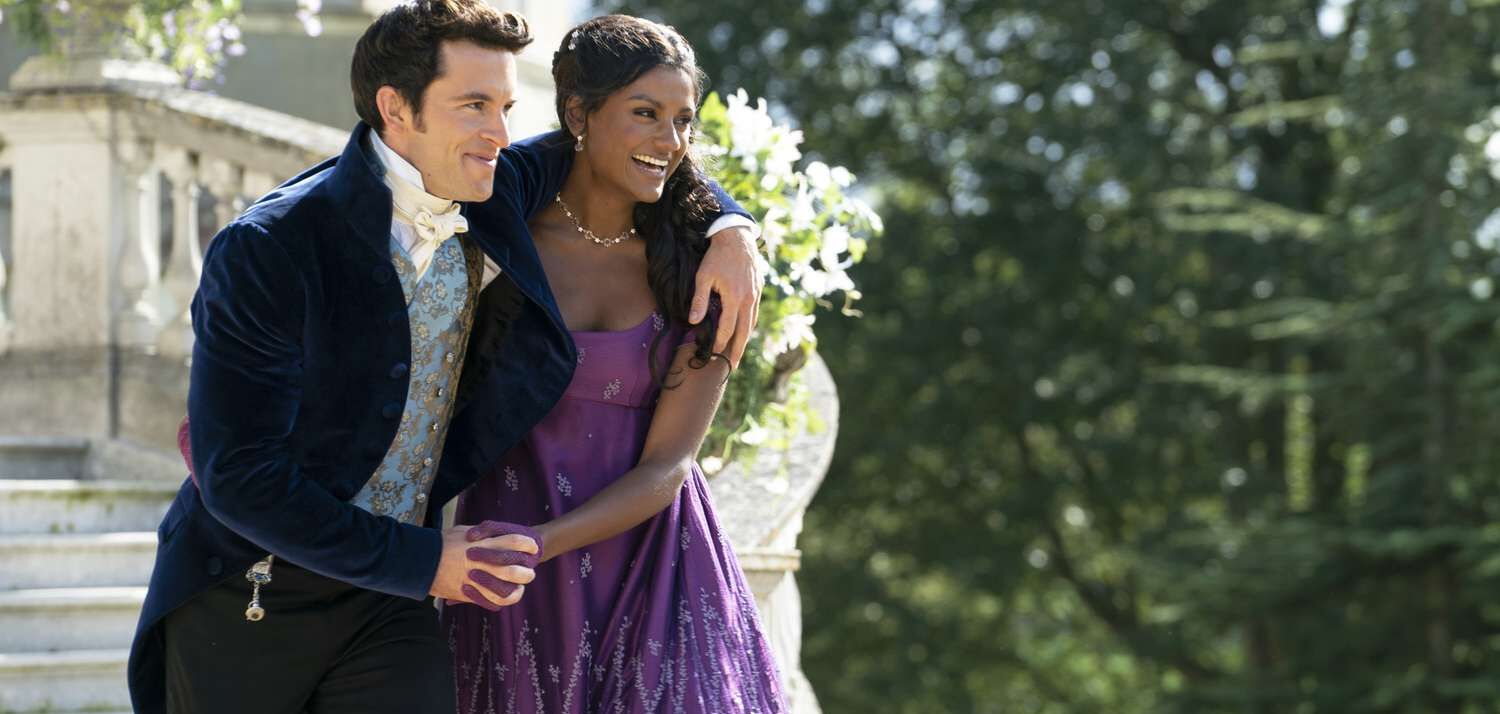
A phenomenal follow-up and the season that propelled Bridgerton into everybody’s eyes. The story follows the Viscount Anthony Bridgerton, eldest son of the Bridgerton family, who is steadfast in his pursuit of a respectable wife and loveless, uncomplicated marriage after the trauma of his father's passing. He becomes enraptured by Kate Sharma, disinterested in marriage, and determined to find the perfect love match for his younger sister, Edwina Sharma. 

This season is universally considered to have the best love story of the series, and it is not without reason. A classic enemies-to-lovers trope with a forbidden romance twist derived from the fact that Anthony falls in love with his fiancée’s sister. Whilst this season depicts a more slow-burning relationship with Anthony and Kate only getting their happy ending in the last 30 minutes, it is the intense yearning from both parties that makes the season so enjoyable. The audience is taken on a journey where we slowly but surely realise that Anthony and Kate’s mutual dislike for one another is actually, in fact, them falling for each other and thus, lends itself to becoming the most addictive Bridgerton season so far in my opinion. 

Additionally, in the words of Jonathan Bailey who plays Anthony Bridgerton, Season 2 intimately crafts “psychological nudity” between the protagonists where the exploration of Kate’s burden of being a ‘stepdaughter’ and older sister is met with Anthony’s unresolved grief and need to uphold ‘duty’, and thus Kate and Anthony expose themselves in vulnerable ways to each other which Season 3 and Season 4 attempted to replicate but slightly missed the mark. 

Further, the iconic orchestral soundtrack from Season 2 is home to the best songs out of the entire series such as Dancing on my Own, Sign of the Times, which accurately act as a musical device to symbolise the growing tension and angst between the lovers and Wrecking Ball, which unveils the ability of Kate and Anthony finally being able to ignore the backlash of their relationship. The instrumental score during their love confession was also beautiful and clearly memorable.

After the reveal of Lady Whistledown, we also get to see how Penelope Featherington runs her business. She visits the sketchy part of town in a cloak, uses a thick Dublin accent and her excellent bargaining skills to make sure each issue of Whistledown is printed. We also see her employ Madame Delacroix. It was refreshing to see an intelligent pair of women making their own way in the patriarchal society of Regency England.

Overall, Season 2 is a masterclass in yearning, forbidden love, and the insane tension between 2 people who finally understand that love and duty can coexist. 

The season that started it all, introduced us to the Ton and is above all, perfection in my eyes. The story follows Daphne Bridgerton, the eldest daughter of the Bridgerton family, who is determined to find her perfect love match. and Simon Bassett, Duke of Hastings, who is steadfast in his promise to his late, abusive father to never marry and end the Hastings lineage. 

The world-building in this season was truly phenomenal - viewers are propelled right into Grosvenor Square, becoming witnesses to the demands of the marriage mart and rituals of the social season. We cannot help but root for Daphne as she is named the diamond of the season by Queen Charlotte. Watchers are also introduced to the anonymous gossip writer, Lady Whistledown, which establishes a layer of mystery for viewers to hypothesise about. More credit should be given to Daphne and Simon, as Season 1’s heavy lifting of world-building allowed the subsequent seasons to go much deeper into family dynamics and the love stories. 

My main reason Season 1 is my favourite is that the fake-dating and friends-to-lovers trope allows the audience to truly understand why Daphne and Simon fall for each other, which seems to be lacking in the subsequent seasons. What seemingly starts as a fake dating ruse to attract more suitors for Daphne becomes more - their conversations throughout the episodes are easy because they are equally witty and challenge each other emotionally, whilst also remaining playful. Daphne and Simon are drawn to each other at every ball before they even realise their affections for one another, which is a classic example of a simple trope so well written that it is tantalising and captivating for the audience to watch. But at the same time, it wouldn’t be a Bridgerton season without a central conflict with the two being forced into a hurried marriage after they’re seen together in a compromising position, serving as a heavy critique of the patriarchal society of the 1800s. Their iconic angsty love confession of “I burn for you” is quickly followed by a honeymoon where Simon’s vow to remain childless is revealed to Daphne, and thus, the second-chance romance trope blooms here. Ultimately, it is through the couple’s devotion and unconditional love for one another that they reconcile their differences and reach compromises. 

Season 1 is perfectly fast-paced in Part 1 to show the shift from Daphne and Simon’s friendship to attraction, as well as the rapid escalation of Lady Whistledown’s popularity in the ton, and intentionally slows down in Part 2 in order for the audience to witness the depth of the relationship as they attempt to weave through their marital issues. It is a raw and realistic portrayal of the role trauma plays in relationships, and it was refreshing to witness a male lead dismantling their emotional armour to truly be with his partner. 

Finally, the visuals in this season are classically gorgeous, with my absolute favourite scene being Daphne and Simon in the art gallery during Episode 3, when they find themselves alone in the room and cannot help but place their hands together. It is a subtle, quiet act, but necessary for their love story.

Ultimately, Season 1 will always be my personal favourite, and it was the perfect start to the Bridgerton franchise. 

Although this isn’t technically an official season of the Bridgerton series, Queen Charlotte takes place in the same Bridgerton universe and is worth noting. I would put this between Season 4 and 3. I had high hopes for this season, but in my opinion, the first half was lacklustre and drawn out, while the second half redeemed it. The love confession and monologue by King George were phenomenal and as iconic as the rest of the Bridgerton seasons. What I particularly enjoyed about this prequel was that it stepped away from the typical social seasons and ballroom scenes we see in Bridgerton, since many scenes are set in the castle where King George suffers in isolation due to his mental health. This setting allows the prequel to have more emotional depth, as the audience has intimate access to their volatile relationship, a tender side of fierce Queen Charlotte, and the devotion from both parties. I also thoroughly enjoyed the depiction of Lady Danbury and Violet Bridgerton’s origins, as well as the backstory of Brimsley and his hidden relationship with Reynolds, which made the subsequent Bridgerton seasons more enjoyable and deeper. Finally, the ending scene of the prequel, with the current Queen Charlotte and King George lying beneath the bed, with heartbreaking transitions to their past selves, was beautifully done and the perfect way to end the season. 

Ultimately, dear reader, whilst I definitely know every viewer has their own ranking, we can all agree that Bridgerton is a fan favourite show for a reason, despite its sometimes questionable moments. The show has created an escapist, fantastical world, with every couple bringing their own magic, and some elements of the show serve as a microcosm of our modern society. I truly love the series, and let’s all hope the upcoming seasons will be just as good!

Yours Truly, 

Nicky


Nicky Tran is a second-year student studying Law and Commerce. When she isn’t talking your ear off about her latest TV show hyperfixation, she is most likely curating a new Pinterest board, watching YouTube vlogs or eating a Fruitologist acai bowl. 


Read More From The Blitz Archive

Are You Starting To Think The Rat From Flushed Away is Attractive?: The Rise of The 'Rodent Boyfriend'

Juno breaks down the bizarre trend of the 'Rat Men' taking over the internet.

Read More

Top 10 Australian Advertisements

Eloise goes down memory lane to recount some of the best and most iconic Aussie Ads that are etched in all our memories.

Read More

A Definitive Ranking of the Beloved Papa Louie Games

Alexa ranks our the childhood cult classic, Papa's Pizzeria games.

Read More

Read More