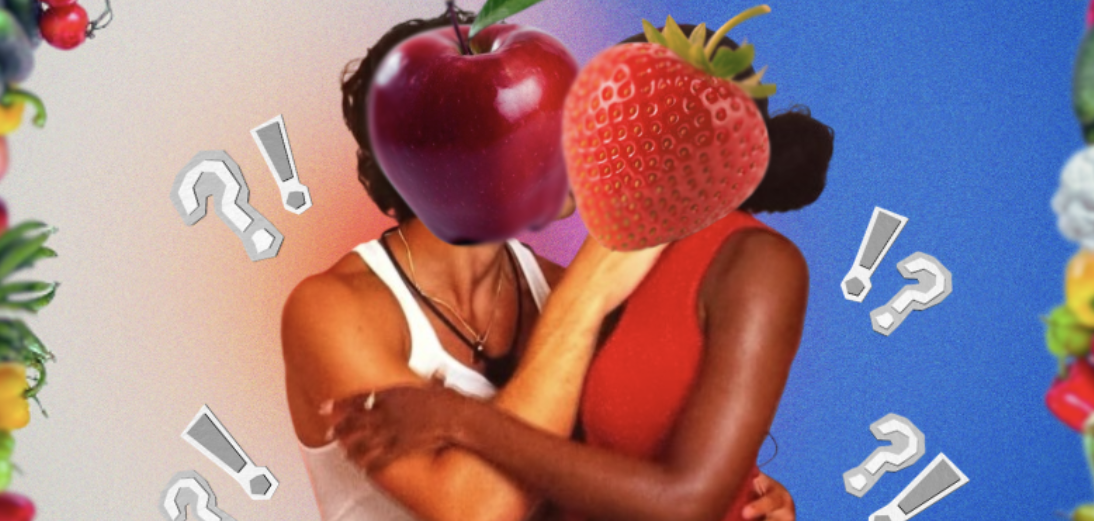
A… fruit has entered the villa? - An observation of AI entertainment on social media

By Nour Ali 

Edited by Jasmin Ada

Scrolling through social media lately feels a bit like being stuck in a fever dream. Whenever a new kind of tech takes off online, you end up with a mix of good, bad, and genuinely strange consequences. Right now, that mix feels more extreme than usual, thanks to the rise of image and animation-based generative AI. AI-generated content is popping up across pretty much every platform we use. There are now hundreds of these AI tools, most of them free and easy for anyone to use. 

That freedom, combined with the lack of policies around AI usage and development, has led us here.

From the creation of realistic fake influencers like Mia Zelu, who has amassed over 160,000 followers on Instagram, to popular TikTok sounds, such as ‘I Run’ by Haven, It’s bled into advertising and commercial material, there are fake podcasts, AI photo and art trends, AI voiceover stories — and weirdly, those very specific short cat stories with the sad, drawn-out “meow meow meow meow” parody of Billie Eilish’s 'What Was I Made For?' playing in the background. (Those have been going platinum on Facebook!)

But… what’s up with all the fruit?

Out of all of it, though, there’s been a noticeable surge in a very specific kind of AI-generated content. Weirdly enough, it's come out of… the villa? 

The series made independently on TikTok is called ‘Fruit Love Island’ by @ai.cinema021, and it has been stirring up quite the uproar. It’s exactly what it sounds like. It’s Love Island, but with anthropomorphic AI-generated fruit as the leading round of bombshells. Thrilling!

I gave it a go and was surprised by its widespread popularity, given the production quality and parody-like plot. 

What’s got everyone hooked? 

‘Fruit Love Island’ has emerged as one of the most mainstream examples in this wave of AI fruit skits, gaining a following of over a million on TikTok. The question that I, and many alike, find ourselves asking is why? 

‘Fruit Love Island' carries all the flaws we already expect from AI content: flat voiceovers, awkward editing, uncanny, out-of-sync lip-syncing, making it feel unpolished and not particularly compelling from a storytelling perspective. 

So… with all this in mind, what on earth is all the noise about? 

What I've found is that its popularity seems less tied to the show's quality and more to the discourse surrounding it. Much of the engagement exists outside the videos: commentary, satire, backlash against the creator, technology, those presumably tuning in to each post, and so on.

Many users find the series' growing popularity unsettling. (And a bit stupid.) Mostly due to the unethical practices that are associated with its creation. The scrapping of artists’ work without consent or credit, negative environmental impacts, users finding the series to be without substance, to name a few. The following screenshots of tweets reflect this.

Some users have even begun using AI to edit influencers' images to make it seem like they’re engaging with the series, which I believe is an attempt to poke the metaphorical ‘bear’ to keep the conversation going, as per the tweet below. 

This suggests that the buzz around ‘Fruit Love Island' is less about people actually liking the show and more about questioning why it exists at all, alongside the broader discourse around “AI slop” in entertainment media—something people talk about rather than enjoy. 

For those who are watching, the appeal likely taps into a basic preference for drama and narrative. Even if the storytelling is incoherent, it still closely mimics the structure of reality TV, making it recognisable and mildly interesting. For a scrolling audience, that familiarity—combined with its absurdity—is enough to capture their brief attention before they eventually move on. The “so bad it’s good” effect, if you may.

This passivity is likely what fuels its circulation even further. Because algorithms treat even a few seconds of watch time as engagement, brief views can inflate the content's reach, making it hard to tell who’s genuinely interested and who’s just passing through.

As I moved past my initial unimpressed impression, I started encountering more content that reflected the same fruit formula.

There’s misogyny in the fruit bowl: 

‘Fruit-Love Island’ isn't the first of its kind in terms of what's already been circulating on the internet; there are various other pop-ups of AI content starring fruit humans as their main cast. 

One pattern that stands out to me in this content is how the feminine-coded fruits are depicted, often leaning into objectification or imagery that feels rooted in humiliation and, at times, abuse.

The pictures below are screenshots I've taken from various TikTok content creators, all of which share the same sort of suggestive undertones ever present in their content.

Without sharing anything too crass, many of these screenshots take place in overly promiscuous scenes and plotlines that mostly centre around the humiliation and degradation of women. This trend has been noticed by many, with reporters like Wired’s Kat Tenbarge and The Tech Buzz also pointing out these patterns. 

The “female” fruits — usually marked by stereotypically feminine features such as long eyelashes, bows, fitted outfits, or accessories — are almost always portrayed as weak, helpless victims. Meanwhile, the “male” fruit characters tend to take on the role of the aggressor or hero.

These women will be put into storylines that centre around skewed power dynamics, or plots that place them in uncomfortable or exploitative situations with overtly suggestive themes and imagery. 

Why fruit? 

A question I keep coming back to is: why fruit, specifically? 

I assumed it might just be practical — fruits and vegetables might be easy for AI models to replicate, since the stylised visual data they need to scrape is already out there.  

It might also be an easy way to bypass demonetisation or avoid having these videos taken down by their respective platforms. 

While the visuals and storylines could warrant concern or removal, AI-generated content occupies a grey area, as platform policies tend to focus on realistic depictions of harm, leaving cartoon or stylised content (in this case, fruit) in a regulatory blind spot. 

It might also come down to the fact that we already associate people with the imagery of fruit — especially when it comes to gender, often without even realising it. As strange as it sounds, given the context in which we’re talking about it, different fruits can carry different sexual connotations in the subconscious of many. While it doesn’t always have to be suggestive, as in these videos, it can easily lean that way.

It might make more sense in emoji form: 🍆🍑🍌🍒 - it’s a bit crude, but you get what I mean.

To this extent, I believe it's also just part of the broader AI absurdist trend — the weirder the concept, the more likely it is to grab attention and go viral; and viral it has certainly gone.

Why is the AI doing such a ‘good’ job?

Even though creators are the ones typing in the prompts, the way these videos turn out isn’t entirely in their control, since the point is that the AI does most of the heavy lifting. And that’s another aspect that has me baffled; why are these systems so good at replicating these power dynamics? I believe the strangeness of these videos isn’t just a product of the creators themselves, but rather it’s also shaped by the context of our world.

A lot of it comes down to what the AI has been trained on. The datasets these tools draw from to generate content are massive, encompassing everything that is already publicly available on the internet. Because these datasets were created and are consistently contributed to by humans, they inherently contain biases, cultural assumptions, and harmful stereotypes. 

So even if the AI wasn’t “told” to be misogynistic when it creates a story about strawberries and bananas, it can reproduce patterns that normalise objectification, stereotypical portrayals of women, or violent/sexualised tropes, many of which are seen within these AI shorts. 

None of this is meant to suggest that anyone who watches or enjoys harmless (non-misogynistic) short-form AI videos is inherently feeding into a culture of violence against women. Rather, my intention is to highlight a recurring pattern in the type of content that can appear amongst us, so our readers can make more informed choices about what sorts of content we consume.

That is to say, support your local artists and content creators! Any AI system or AI-generated content you encounter is built on the hard work and creative spirit of countless artists who have shared their stories on the internet. It’s probably more enjoyable, too.

If you’re in the mood for fruit-themed drama, I reckon we should go back to our roots. There’s a certain Annoying Orange that might just spark your interest and bring back some early-2010s nostalgia. 

Hey Apple, Knife!


Nour is a 2nd-year media student studying her undergraduate degree in PR and advertising/journalism and communications, and is hopelessly curious about everything related to internet culture and trends.


Read More From The Blitz Archive

Are You Starting To Think The Rat From Flushed Away is Attractive?: The Rise of The 'Rodent Boyfriend'

Juno breaks down the bizarre trend of the 'Rat Men' taking over the internet.

Read More

Top 10 Australian Advertisements

Eloise goes down memory lane to recount some of the best and most iconic Aussie Ads that are etched in all our memories.

Read More

A Definitive Ranking of the Beloved Papa Louie Games

Alexa ranks our the childhood cult classic, Papa's Pizzeria games.

Read More

Read More