A Love Letter to Nurses: What the Pitt gets right

By Asha Chiu

Edited by Parijat Barua

For most of my childhood, my aspirations were simple: slice open unmoving bodies and breathe them back to life with expert precision. That’s what the medical dramas I grew up on have always been about- performing open heart surgery on the job, and then hooking up with a hot coworker from neuro after hours. 

Now that I’m a little older and a little wiser, I’ve not only come to terms with the absolute HR nightmare that hooking up with my colleagues would be (although I’d still take the chance if it was John Carter), I’ve also gained an appreciation for the unsung heroes of the world; the man in the chair; the Alfred to one’s Batman; those who work tirelessly behind the scenes with barely any recognition. Maybe it’s for this very reason that I find myself so drawn to HBO’s newest medical drama: The Pitt. 

Led by senior physician Dr Michael Robinavitch, Robby for short, who is played by none other than Noah Wyle (John Carter!!), The Pitt, through its 15-episode recount of a single ER shift and an incredible cast of characters, creates a space to critique the American healthcare system, expose the often unseen problems medical staff face, and confront the inevitable grief and pressure that come with the responsibility for someone else’s life. Amongst all of its merits, however, one particular feature of The Pitt sets it apart from other shows of the same genre: its unwavering advocacy for the nurses. 

“Actually, this is the most important person you’ll meet today. This is Dana, she’s our charge nurse. She is the ring leader of our circus. Do what she says when she says it, okay? ” - Dr Michael Robinavitch

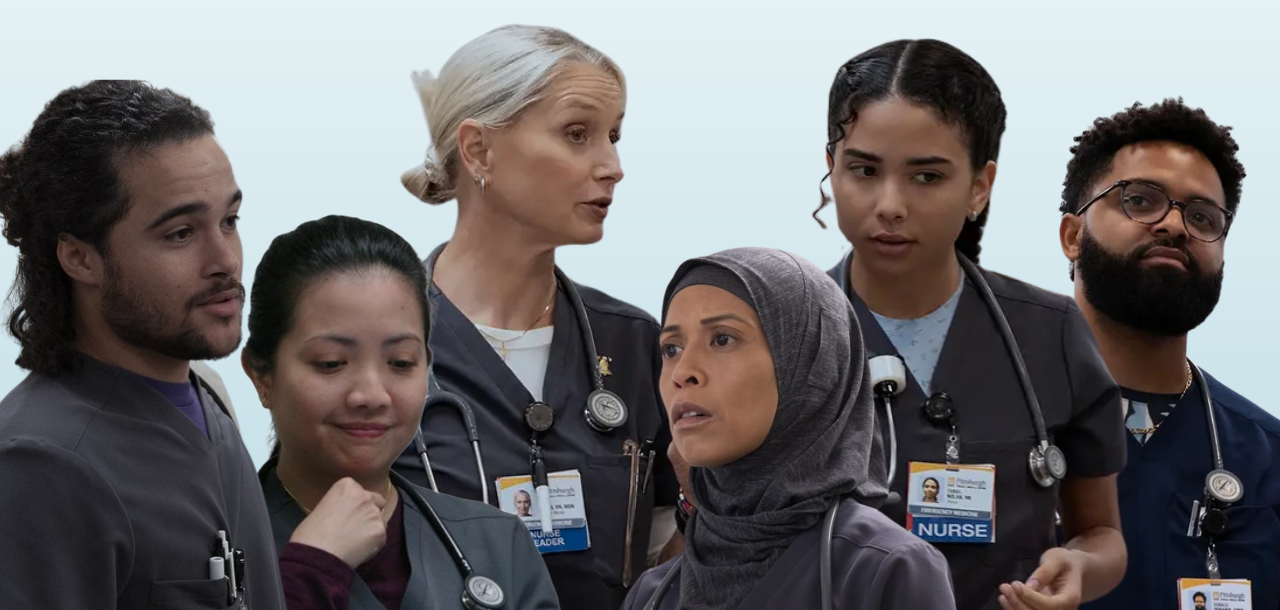
One of the first things that Dr Robby makes clear to the newcomers of the Pitt is his respect for Dana Evans, the charge nurse on the day shift. Throughout the series, we watch Dana manage files, run around breaking up fights in triage, all whilst being on top of the little things that are too trivial for doctors to handle, but not quite trivial enough to have no effect on patients and staff. We’re also introduced to Donnie, Mateo, Perlah, Princess, Jesse, and, later on in season 2, Emma, all of whom are nurses who don’t shy away from the limelight. Together, they cover for each other, help move patients in and out, assist with medical procedures, and place bets on ambulance crashes and cyberattacks whenever they have a spare second. They may get less attention than the doctors; however, it is glaringly obvious that without this team of incredible nurses, the Pitt would collapse quicker than the time it takes for Dana to come up with a one-liner (Baby Jane Doe!). 

Conversations surrounding the medical profession centre largely on the doctors; those who have a direct hand in determining whether a patient lives to see another day or passes away without ever knowing it. Most medical dramas reflect this, opting to focus on the everyday struggles of brilliant doctors, from the inescapable guilt that arises with every lost patient to the power disparities between students, residents, and senior doctors. However, we tend to sweep nurses under the rug in our discussions of the medical profession, forfeiting the conversations about increasing nurse burnout, patient safety, and the similar struggles of anxiety and depression that nurses face every day on the job. 

This is what makes The Pitt so special: the nurses aren’t cast for workplace drama or mise-en-scene. They represent real people facing these issues, all the same, in one of the most demanding professions of our workforce, who are unfortunately neglected in mainstream representation. It’s in the countless scenes where we hear the doctors holler for medicine, but watch the nurses hand it over within a moment’s notice from one of many drawers, all through the chaos of the ER. We see it when Dana walks out for a deserved smoke break, only to be punched down by an angry patient. Then we watch Princess and Perlah step up to cover for Dana, keeping on top of patients and cases whilst Dana is checked for her injuries. Watching the inner operations of the Pitt reminds me of a speech I’ve heard before: If doctors ought to be the brains of an ER, then the nurses must form the heart that pumps blood, circulating oxygen so the brain can do its job (bonus points if you know where this speech is from). 

In particular, Dana falling victim to patient aggression and the paranoia that she lives in emphasises why The Pitt’s representation of nurses is so important. The many physical altercations between nurses and patients or federal enforcement confront audiences with an ugly reality of the healthcare profession: the failure of institutions in ensuring the well-being and safety of health professionals, as we’ve seen in many other medical dramas, is a major facilitator of the increasing rates of depression, anxiety, and major burnout in doctors and nurses. The Pitt, however, further exposes how, beyond mental repercussions, nurses are also susceptible to physical consequences as a result of these systemic shortcomings, extending the conversation surrounding issues within the healthcare profession beyond the scope of doctors, and giving grace to the nurses who put up with double the amount of consequences for half of the appreciation doctors are shown. By portraying the camaraderie between the ER nurses as they navigate an incredibly flawed system together, The Pitt asks an uncomfortable, but nevertheless important question: if institutions won’t stand up for nurses being punched down, unjustly detained, and choked out on the job, then who will? 

With that being said, the next time you unfortunately find yourself at a hospital waiting five hours over a broken finger, as I did, show the nurses some well-deserved respect and appreciation- because if The Pitt has taught you anything, one of those lessons should be the indispensability of ER nurses. Far too many Danas in the healthcare profession are constantly grappling with the flaws of a system that protects shareholders more than their own staff, pushing through burnout and exhaustion all whilst dedicating their efforts to being on top of things, like where your medicine is, or which bed to allocate patients to; things that are put on the back burner in your doctor’s mind, but could still very well be the difference between someone’s life and death. The appreciation that nurses deserve from mainstream media has been long overdue, but The Pitt is paving the way for conversations surrounding their contributions in healthcare, and calling for change in a system that oftentimes sweeps them under the rug.


Asha is a second-year Mechatronics Engineering/Politics and International Relations student. When they’re not buried under assignments and pre-labs, you can find them (still) trying to kickflip at a local skatepark, getting lunch at the nearest noodle joint, or catching up on the 5+ animes and games they’ve started and swear they’ll finish (one day).


Read More From The Blitz Archive

Are You Starting To Think The Rat From Flushed Away is Attractive?: The Rise of The 'Rodent Boyfriend'

Juno breaks down the bizarre trend of the 'Rat Men' taking over the internet.

Read More

Top 10 Australian Advertisements

Eloise goes down memory lane to recount some of the best and most iconic Aussie Ads that are etched in all our memories.

Read More

A Definitive Ranking of the Beloved Papa Louie Games

Alexa ranks our the childhood cult classic, Papa's Pizzeria games.

Read More

Read More