Imagine interacting with an artificial intelligence robot. Except it looks exactly like a lost loved one. It talks like them and even acts like them. It offers you a chance to cling to your last memory of them and to confess messages you never got to say. In Sheep in the Box, director and editor Hirokazu Kore-eda blends science fiction and fantasy to examine whether technology can fill the absence left by a loved one. Consistently showing films at the Sydney Film Festival from 1996, Kore-eda once again delivers a deeply touching story, this time asking the audience: can technology help us heal, or does it prolong our grief?
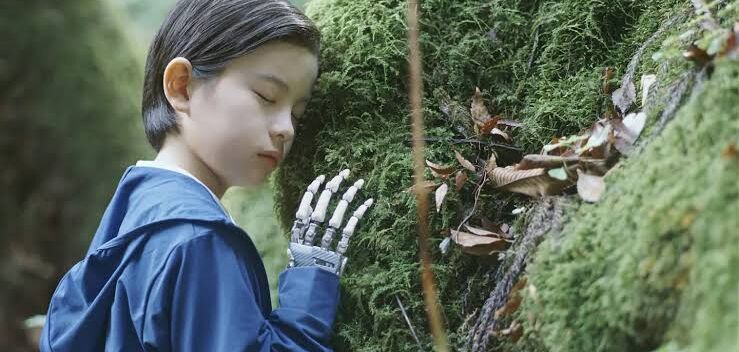
The film follows a grieving married couple, Otone Komoto (Haruka Ayase), an intelligent yet emotionally fragile architect who normally works from home, and Kensuke Komoto (Daigo Yamamoto), a grounded and resilient carpenter who prefers a simple lifestyle. Their suffering comes from a hit-and-run accident two years ago, where they tragically lost their 7-year-old son Kakeru. However, their sadness ends when they are approached by REbirth, a company that offers them an identical humanoid replica of their late son directly to their house. And when the Kakeru humanoid announces he’s home, I could not help but shudder – something was unsettling about his presence, his emotionless responses, and robotic mannerisms.
Both parents welcomed this differently. Otone is more emotionally invested in the Kakeru humanoid as she tries to reconnect with her long-lost son, while Kensuke is more dismissive, telling the humanoid during their first meeting not to call him father but to call him 'mister'. With all the small subplots and laughter from some humorous moments, the Kakeru humanoid somehow develops a mind of its own and searches for its freedom.
What this film does well is capture the family dynamics during the complicated stages of processing loss. Ryûto Kondô’s cinematography immediately captures the paralysis of loss. Lingering shots of Kakeru’s room, with its untouched toys, belongings, and clothes, serve as stagnant monuments to the parents’ grief. The film’s quiet visual storytelling often communicates more than the dialogue, and paired with the ambient sounds, this creates an atmosphere that feels both intimate and emotionally authentic.
Haruka Ayase delivers a strong performance as Otone. She convincingly portrays a mother torn between hope and denial, desperately believing the humanoid can somehow preserve her connection to her son. Through subtle facial expressions during tense moments, Ayase captures the conflicting realisation that while the humanoid may be a replica of Kakeru, it cannot truly replace him.