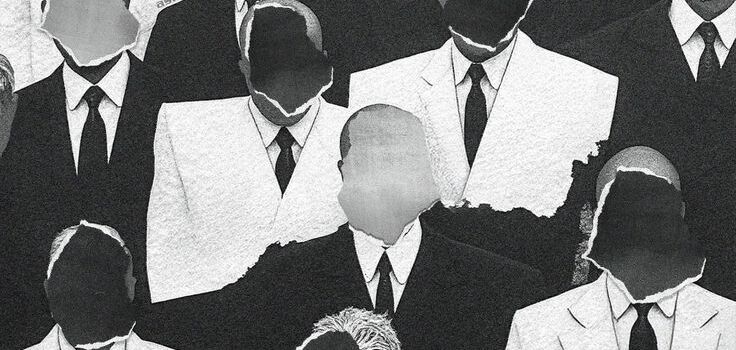
Every story needs a villain. We tend to picture one with a long shadow, but in reality, what stands against us most often is far harder to fight. It is the shape we take in other people’s words.
Most of us are trying to be good people. We listen past our own limits. We extend the benefit of the doubt like a hand held out in the dark, and we try again and again to imagine what it is to be someone else. We hope to leave kindness and empathy behind when the room has emptied. That is why the fear cuts so deep. If we didn't care about being good, it wouldn't matter what anyone thought of us. But we do care, sometimes to our own detriment.
In your own story, you are the protagonist. You know the weight behind your choices and the meaning behind every sentence you have ever spoken. In a stranger’s story, you are a figure at the edge of the frame, glimpsed merely in passing, drawn from a few brief scenes by someone who cannot see what you carry. The people who barely know you are the quickest of all to draw. With so little to go on, they reach for whatever is nearest: a rumour, an awkward moment, the tone you used. A single scene becomes your whole character. Shyness gets misread as arrogance. Boundaries are seen as selfishness. Reaching out is labelled: controlling.
Then the story grows legs and travels. It changes a little with each retelling, like a whisper down a long line of people. What arrives at the end bears only a faint resemblance to what began. By then, it belongs to no one. It is simply what people say.
The saddest part is that a perception does not need to be accurate to be powerful. A false impression can cool a room, close a door, or follow you into places you haven't yet walked. Often, we feel only the draft and never find the window that was left open. We cling to the comforting idea that if we are consistent enough and kind enough, the truth will rise on its own. Sometimes it does. But people draw portraits quickly in rough charcoal, and once an image is set, they bend every new fact to fit it.
And yet, this is the part the Wednesday-night version of the story always forgets. Good people exist. They are far more common than the fear lets you believe. They won’t take a rumour at face value; they wait to meet the person before deciding who she is. They see the good in you without needing an explanation.
Time is the great editor. The longer someone sits across from you, the more that rough charcoal gets smudged and redrawn, scene by scene, until the portrait finally looks like you. They see the effort, the way you show up, the kindness that was never for show. They learn that your shyness was never arrogance, that your boundaries were never selfishness, and that reaching out was only ever care. The ones worth keeping will not need a defence from you. They will simply watch, and they will know.
But let’s be fair to the Wednesday-night questions, because some of them deserve an answer. Could you have said it better? Did you hurt someone? If the honest answer is yes, then go and apologise. Ask what you missed. Ask for clarity instead of guessing it in the dark because a real conversation will always provide more closure than the one you rehearse alone.
But if you have apologised, listened, done the work, and been forgiven, and they still choose to spend your name at their table, then that is one of them. You cannot be sorry forever for something that has already been settled.
So keep being yourself. Not as a campaign to win over a jury that never convened. You are not doing any of this to prove anything, least of all to the people who didn’t have the guts to tell you to your face what you did wrong. Anyone with a real problem with you can find the words and the nerve to say them, where you can answer. The ones who can’t have given up their say. Their version of you was never meant to reach you. It was only meant to fill a silence at their table.
So turn the lamp off. Let the name be spent somewhere far from you. Tomorrow you will wake up and be kind again, honest again, open again.