
Are You Starting To Think The Rat From Flushed Away is Attractive?: The Rise of The 'Rodent Boyfriend'
Juno breaks down the bizarre trend of the 'Rat Men' taking over the internet.
In 2024, I saw Jane Schoenbrun’s “I Saw the TV Glow” at the Sydney Film Festival. The film evoked a sense of dread from beginning to end that didn’t leave me even when I had left the theatre. In fact, that dread sat within me for weeks after. It was existential, the fear of how denying oneself festers within, bleeding out into the reality, creating a fiction that can feel so real until you finally wake up to realise you may be living in an opaqued version of the world, and within an opaqued version of yourself. I’ve been searching for a film that evokes that same feeling in me, that leaves me stuck playing and rewinding the plot in my mind for a long time after. The 2026 Australian horror film Leviticus, which I had the pleasure of watching at the Sydney Film Festival last week, evoked this within me.
I’ve always had the opinion that Australia has a lot of horror to offer. Not only with our simultaneously arid and plentiful landscape and our extreme geographic isolation from the rest of the world, but also our underlying (rivaling) beliefs and our histories (ones that have been told and ones that have often been ‘conveniently’ left unsaid). Beneath the surface of our international mask as the sunburnt, happy-go-lucky country is something sinister that our horror film industry can touch upon through metaphor without too much fear of public outrage. From noughties classics like “Wolf Creek” that highlight geographic isolation and violence, to more recent films like “Talk To Me” which explore youth drug culture and grief, Australia has had a rich tapestry to pull from within our horror.
“Leviticus” is no exception, as this 2026 Australian film directed by Adrian Chiarella explores the horror of the queer youth experience in a small, religious Victorian town. Joe Bird, who was incredible in the Australian horror film “Talk to me”, does another outstanding job in his performance as Naim, a teen boy new to this regional town and son of a mother heavily involved in her religion, especially since the passing of her husband (Naim’s father). It's in this town that he meets Ryan (played by Stacy Clausen), a local boy who apparently ignores him at school but surprisingly invites him out to an old, dilapidated factory in the afternoons, where the two begin to bond and form a romantic relationship. After catching Ryan with another boy in town, the pastor's son, Naim informs the pastor of his son’s involvement with Ryan. Both boys are subsequently sent to have a ritual performed upon them by a religious leader, after which Ryan begins to act very differently, withdrawn and fearful, particularly towards Naim. Naim, after his mother discovers that her son is also queer, subjects him to the same ritual. It is then that from Naim’s point of view, we the audience begin to see what has been causing Ryan to be so fearful of Naim. Both boys are now being haunted by a spirit or entity that takes the form of the person that the victim of the ritual is “most into” (as described by some of the characters in the film) and hunts the victim the more they “give in” to their desires. We later in the film find out that Naim’s mother was aware of the fact that the entity was violent, and was aware of the danger she was putting her son in, but did so to “protect him” from homophobic violence in the future.
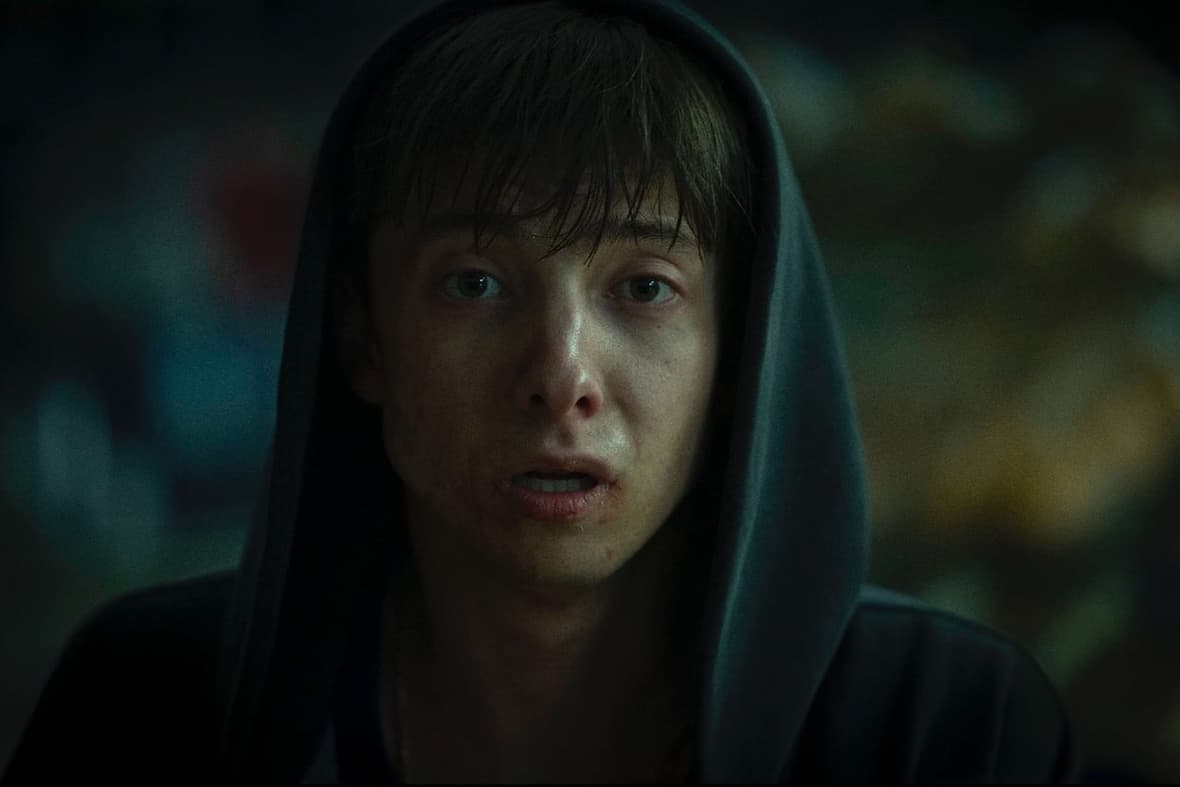
During the premiere screening of the movie, a Q&A was conducted, and one of the audience members asked if the film was a metaphor for conversion therapy, which it very clearly is. However, the movie presents a rolodex of horrors a queer Australian teen living in a small town may face as a consequence of ignorance (at best) and hatred (at worst). Throughout the film, Naim and Ryan face not only the violent doppelganger of their lovers, they face the non-supernatural violence of their high school peers, of their mothers, fathers, friends, neighbours, religious leaders and police. We watch as Naim, and other queer youths, are consistently let down by the adults they are surrounded by, either intentionally due to their belief system, or unintentionally by their lack of experience on how to treat young, queer people trying to exist within hostile environments.
The title of the film is a clear reference to the Leviticus chapter within the Old Testament, one that is often referenced to give supposed legitimacy to practices such as conversion therapy. The protagonist's name, Naim, stood out to me immediately upon watching the film. Upon further research, I learned that Nain (also spelt Naim when anglicised) is the village in the Gospel of Luke where the miracle of the “raising of the son of the widow” occurs. In this chapter, we are told of how a widow was mourning the death of her son at his funeral, and upon seeing this, Jesus told the son to awaken and he did. Naim in the film is the son of a widow who is apparently so scared of losing her son that she is willing to knowingly put him in mortal supernatural danger to protect him from non-supernatural mortal danger. The raising of the son of the widow does occur by the end of the film, but not in the way we might think. Where we first see a boy supposedly doomed by his circumstances and the people he should be being supported by, we later watch this boy be reborn into his true self and more importantly, survive, leaving town with Ryan despite the continued looming threat of his other, violent doppelganger presence. The raising of the son doesn’t happen for or because of the widow, but in spite of her.
I have seen this movie compared to ‘It Follows’, and whilst the premise of being followed by something malevolent is clearly very similar, the unease and discomfort is compounded by the fact that it is not just some random malevolent force following Naim, it is someone he knows and cares about. It is the person who is the source of his love, affection, understanding of himself and his identity, and similarly, the source of his mortal fear and potential death. This ‘curse’ can never be undone for Naim. He will be followed by this fear for his whole life. It is not something he can ‘fix’ or ‘undo’. He will need to simply manage this threat. Despite the jumpscares, this movie was less of a traditional horror film to me, and instead invoked that same existential horror I felt watching “I Saw The TV Glow”. It does what I think horror can do better than any other genre, it explores how people learn to fight through deeply traumatic experiences. It presents the resilience of the human spirit and the idea of hope in a hopeless situation. As I was sitting in the audience, I watched Naim and Ryan’s calm faces in the bus, on their way to another, bigger, more vibrant town. That night, I didn’t leave the theatre feeling as though these characters were doomed or, like when watching “TV Glow”, feeling a deep pain for the protagonist as they continued to fight to rip the opaque sheet from their view and claw themselves back into their true reality. Conversely, I left feeling, knowing that they had, and would continue to, survive.
Leviticus’ Australian theatrical release begins on Thursday, the 18th of June.
Neve Jacqueline Thomson is currently studying English, French and Education. She loves to read, watch and write about the horror genre and speculative fiction.
Madeline Kahl
Ineke Jones
Juno breaks down the bizarre trend of the 'Rat Men' taking over the internet.
Eloise goes down memory lane to recount some of the best and most iconic Aussie Ads that are etched in all our memories.
Alexa ranks our the childhood cult classic, Papa's Pizzeria games.