Ot-HELL-o and Des-DEMON-a, but are they really hellish?

By Anagha Abhi

Edited by Abbey Glendenning

My first encounter with Shakespeare’s Othello was during a Year 10 Specialist English class. I had mixed feelings about it. On one hand, there was a bit of imposter syndrome: as much as I loved analytical writing, during this class I never ‘fit in’. I was expected to know how to write, analyse, and make sense of things that were beyond me. Yet, the texts themselves — ranging from graphic novels to cultural fiction — were exciting. I can still remember how electric yet versatile they felt. 

The approach for Othello was a bit complicated. We borrowed this chunky book filled with playscripts and decided to assign people to characters to perform parts of the play. While I understand the value of active learning, the experience failed to give importance to the broader context, and hence, to the words we were reading. My unanswered question shifted from what is happening to what is shaping what is happening?

What changes when you watch a Shakespearean play rather than just reading through it? This question I had harboured for years was finally answered as I immersed myself in Rayyan Khan’s directorial debut

___________________________________________________________________________

Before I unpack the plot of Khan’s Othello, I want to commend what immediately captured the setting for me — the costumes. Georgiana Truman made incredible notes of identifying gender, geographical, and temporal context which integrated audiences into 1600s Venice. Desdemona’s outfit was a great indication of setting; its almost-Grecian undertones with a flowy, lace-trimmed white dress akin to a peplos solidified the European context of the play. 

Figure 1: Desdemona’s outfit (Photo credit: George Tsakiris)

The costuming also included several wealth and status indicators. The elaborate display of fur coats, tailored suits, trench coats, and gold jewellery created a status quo where indulgence, dignity, and nobility all coexist. Consequently, the have-nots in the play become pronounced, their scrutiny being inevitable without even a single word spoken.

Khan’s play begins by establishing the relationship between Iago, played by Reuben Kemp-Burrows, and Roderigo, played by Ben Moody. There’s a visible power dynamic in their friendship that extends through the whole play; Iago leads with persuasion and slight intimidation, and Roderigo complies, falsely seeing Iago as a knowledgeable and trustworthy figure. This dynamic is reiterated through proxemics; Iago, for instance, is seen instilling fear in Roderigo by inching closer and putting his hand on his shoulder, causing Roderigo to retreat into himself. 

Brabantino, portrayed by Aidan Hale, initiates the divide between Iago and Roderigo. While Roderigo acts as an accomplice to Brabantino, conspiring against Othello and Desdemona’s relationship, Iago is dependent on Othello’s troops and support. Rayyan cleverly shifts Brabantino’s entrance from “[appearing] above, at a window” to sitting in the audience. This change creates a sense of unpredictability, constructing a sense of immersive theatre. Now feeling part of the action, the Early Modern English that Shakespeare writes in becomes completely unnoticeable. This effect is compounded by the lighting designers (Tash McBride and Grace Niu), who add a spotlight on Brabantino to further engage the audience in the setting.

Roderigo is portrayed as passive and gullible in relation to both Iago and Brabantino, influencing his relations with the other characters in the play. Ben Moody takes the character to a point of hilarity; from sleeping in the council chamber of the Duke (portrayed by Tom Crennan) during a heated debate between Othello and Brabantino, to hiding under tables, Roderigo is someone ‘lost’ amid the crass order of Venice. 

Iago is established as a clear villain, achieved through the same dramatic irony you find in the original play. Yet, what is compelling about Rayyan’s Iago to me may be a minute detail — the black under-eye makeup done by Vivienne Boucher, hinting at Iago’s dark nature and highlighting his Machiavellian character.

Iago’s monologues create a clear distinction between the audience’s awareness of his Machiavellianism and the other characters’ misconception that he is benevolent. With the help of the sound designers Georgia Andrighetto, Coll Burns and Oriana Chan, an ominous mood is created during Iago’s monologues. In doing so, audiences can pinpoint his ulterior motives while the characters rely merely on his empathetic and logical dialogue.

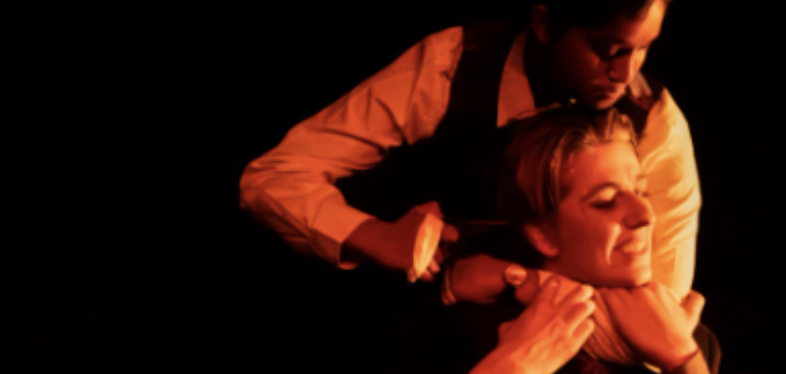
Figure 2: Iago (left) and Roderigo (right) (Photo credit: George Tsakiris)

Rayyan’s choice to preserve the racial divide from the original Shakespearean play was crucial to expedite the class politics of 1600s Europe. Kathleen Thomas as Othello not only subverted the gendered expectations of the masculine character, but also allowed for an interrogation into 17th century misogynoir.

We are indirectly introduced to Othello through his experience of racial discrimination from Brabantino who vehemently denies his relationship with his daughter, Desdemona; he, for example, repeatedly insults Othello for being a “moor.” This reflects the dominant 1600s perspective that being a dark-skinned foreigner detracts from Othello’s knowledgeability as a person in power. The only person who seems to be somewhat impartial to Othello is the Duke, who states to Brabantino, "your son-in-law is far more fair than black".

Othello talks within a formal cadence; there is a difference between the noble way he converses and the more casual way the other characters talk to each other. Hence, Othello is positioned as respectable, amicable, yet cold. His grey suit reinforces this distance.

A particular detail by Truman that I appreciated was the red flower worn by Othello and Cassio. Contextually, it is a boutonnière used to ward off negativity and protect oneself. Yet, the colour of the flower parallels the wearing of the Remembrance poppy, which is typically worn over the heart to represent bloodshed on the battlefield. 

Figure 3: Othello’s formal attire (Photo credit: George Tsakiris)

Cassio, performed by Euan Howells, is a character who embodies the white superiority embedded within the play. Initially admired for his charm and diligence, he is notably more connected and easy-going than Othello. However, this friendliness unravels his hamartia. After he gets drunk with Roderigo and Iago, his underlying rage is revealed as he attacks Roderigo. This mini-catharsis foreshadows Othello’s larger violent outburst, which concludes the play.

Figure 4: Roderigo (far left), Cassio, and Iago (far right) (Photo credit: George Tsakiris)

Summer Douar’s Desdemona is far from a simple female lead. Though she is submissive to her husband, she is also rebellious; smoking herbal cigarettes, for example. This is a reflection of the initially strong level of trust and loyalty fostered in Othello and Desdemona’s relationship. Yet, Cassio’s presence crumbles this characterisation of Desdemona. 

The other females in the play are deceptively secondary; their typically more minor roles embody the gender inequalities present in the 1600s. 

Bianca, played by Aimee Crispin, is a good example. As the hidden mistress of Cassio, she is portrayed as charming yet uncouth, making her existence socially unacceptable. Her character is instantly defined by her exaggerated black eyeliner, leopard print top, black leather jacket, and heels. Crispin’s acting style allows Bianca to appear all the more unapologetic. She, for example, frequently kisses Cassio with unexpected aggression, and is consequently dubbed a “whore”, “public commoner”, and a “strumpet” by other characters. However, her affection towards Cassio is seen by audiences as being one of care and unconditionality, as she, for example, quickly runs to Cassio’s aid after he is attacked by Iago and Roderigo. Compared to Bianca’s ostracisation, Desdemona, when defending her faithfulness to Othello, states, “No, as I am a Christian: If to preserve this vessel for my lord / From any other foul unlawful touch / Be not to be a strumpet, I am none." This contrast exemplifies the play’s commentary: women have to maintain certain social codes that men do not, in regard to sexuality, to not be scrutinised.

Figure 5: Bianca and Cassio (Photo credit: George Tsakiris)

Women are also required to be passive members of society, which leaves them unheard. This is exemplified through Iago’s mistress, Emilia, played by Nina Schief. Emilia knows the full picture of how Iago instigated the rumour of Cassio and Desdemona’s affair, yet when she defends Desdemona, she is shut down by Othello. Othello instead places all of his trust in Iago’s telling, which emphasises the male power that exists in the play’s 1600s context.

Figure 6: Emilia (left) and Desdemona (right) debriefing (Photo credit: George Tsakiris)

However, the final act — where Othello’s clouded judgement leads him to kill his wife and shoot Emilia after labelling her a "villainous whore” — ends in Othello’s suicide as he realises he is at fault much too late. This lack of trust in, and respect for, women becomes Othello’s largest, ultimately fatal, fault, revealing the fragility and falsehood of men’s perceived superiority. 

Figure 7: Final catharsis of the play (Photo credit: George Tsakiris)

While there were some prop decisions that affected the temporal context of the play, such as the use of phones as communication mechanisms or the use of pucks as weapons, Rayyan’s play still overwhelmingly left audiences in reflection. Despite Iago being defined as the culprit, he is still alive while other characters had to pay with their lives for falling for his schemes, and maintains the social power of being a white male. Hence, his exercise of sovereignty over minorities leaves audiences with the same questions asked centuries ago: 

How do we discern who to trust, and does power and influence always equate to credibility?

​Anagha Abhi

​Anagha Abhi

(full: Anagha Abhilash Kumar) is a Bachelor of Arts student, majoring in Creative Writing. She is a columnist and editor for Blitz, an editor for UNSWeetened and a host and producer at Backchat FBi Radio. You will probably find her around campus wandering around with a cup of coffee and a notable amount of pink accessories.

Read More From The Blitz Archive

Are You Starting To Think The Rat From Flushed Away is Attractive?: The Rise of The 'Rodent Boyfriend'

Juno breaks down the bizarre trend of the 'Rat Men' taking over the internet.

Read More

Top 10 Australian Advertisements

Eloise goes down memory lane to recount some of the best and most iconic Aussie Ads that are etched in all our memories.

Read More

A Definitive Ranking of the Beloved Papa Louie Games

Alexa ranks our the childhood cult classic, Papa's Pizzeria games.

Read More

Read More