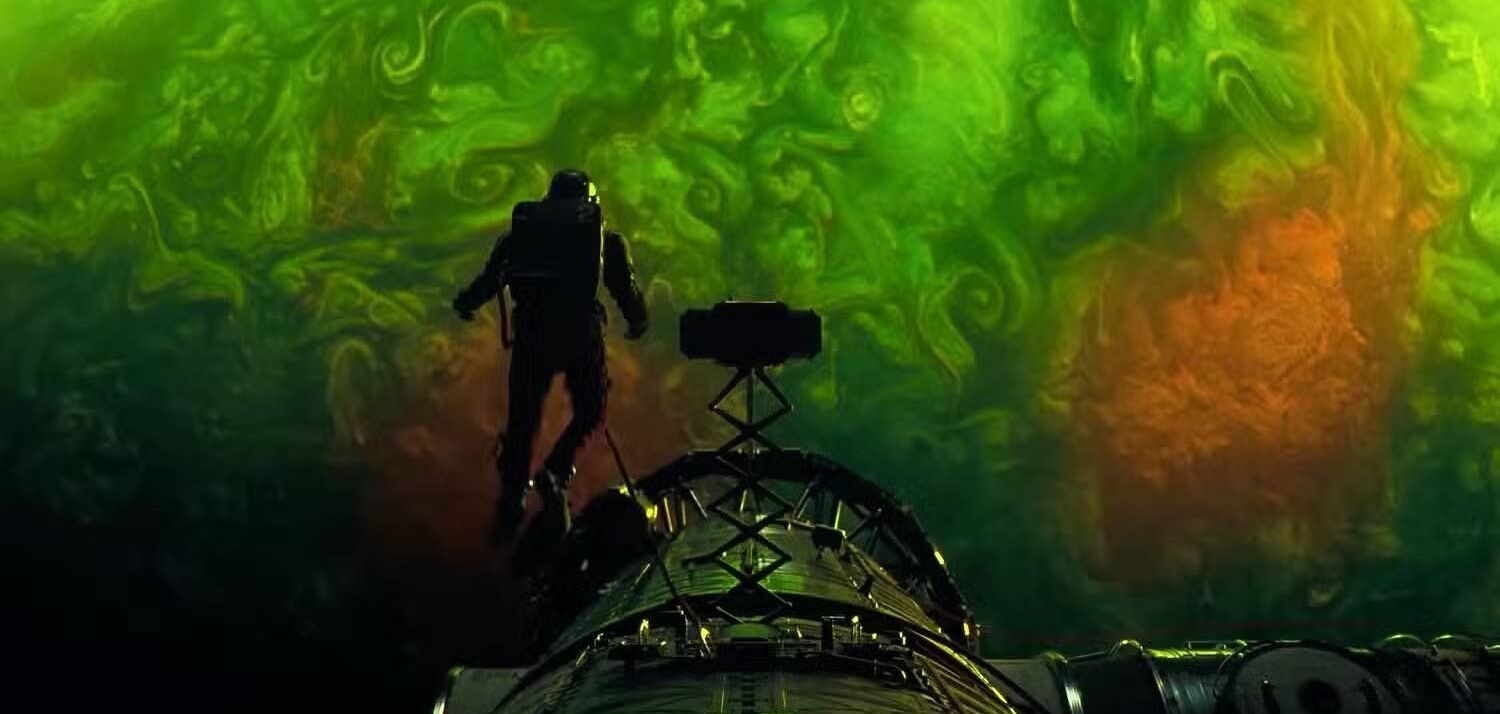
This isn’t to say Project Hail Mary doesn’t have the spectacle of a Marvel film. With its massive $200 million (USD) budget, there was plenty of room for jaw-dropping eye-candy, and as such, Amazon MGM Entertainment marketed the film as a “must-see in IMAX experience” to draw in audiences who wouldn’t usually make the effort to risk the price of a ticket on an unestablished franchise. According to IMAX International, despite making up barely 1% of cinemas in North America, IMAX screenings accounted for around 20% of the domestic revenue for Project Hail Mary. So, clearly, younger audiences have no issue going to a theatre if the film demands the trip and the ticket price.
In conversation with IMAX International and Amazon MGM Entertainment, Blitz UNSW obtained the following statements:
Project Hail Mary’ is an excellent film for which Amazon/MGM ran a brilliant campaign, leaning heavily on the power of IMAX as a global launch platform across production, marketing, and distribution.”
...there is an enduring connection between IMAX and space, and this film’s stunning depiction of the cosmos stands among the best — it truly demands to be experienced in IMAX.”
Therefore, rather cynically, the sentiment of “saving cinema” can be seen as little more than a marketing campaign gone right. However, it could instead be the growing desire among younger audiences to break away from the standard formulaic films and discover something that more accurately speaks to them socially, especially as a collective becoming adults in an increasingly uncertain world. I have no doubt that many young people see Project Hail Mary as a symbol of hope, that even under the most extreme of challenges, whether that be climate change, conflict, or the petrova line, the human race can survive and, moreover, thrive.
So far, it seems Grace and Rocky really are saving cinema, but I would be remiss if I didn’t mention a counterpoint to the idea of Project Hail Mary “saving cinema”. To the uninitiated, before becoming Ryan Gosling’s latest smash-hit, Project Hail Mary was a novel of the same name by author Andy Weir (The Martin, Artemis), and while there is absolutely nothing wrong with adapting a good novel into a film (see Little Women or The Godfather) when discussing if a film is “saving cinema” it seems difficult to have that conversation without a mention of screenwriters. In the days before the dominance of franchise films, specialised film writers, known as screenwriters, were hired in the hundreds to work for all the major Hollywood studios. Pulp Fiction, Taxi Driver, Eternal Sunshine of the Spotless Mind, and Alien are just a few examples of classic films written by teams of screenwriters who spent hours in meeting rooms discussing ideas and crafting films designed specifically for the silver screen. This practice was the breeding ground for variety and narrative innovation in the film landscape, and unique perspectives were valued and, more importantly, encouraged.
With the advent of modern technology like generative artificial intelligence and the financial incentives of creating derivative sequel films, screenwriting has quickly become a dying art. Thus, there is a danger in heralding Project Hail Mary as the saviour of cinema when it continues Hollywood’s trend of cutting screenwriters out of major film production and needing gargantuan budgets to be successful.
Certainly, Project Hail Mary represents a big step forward in bringing more unique films back into the broader public sphere, but in reality, the film still represents a high-budget, big-tech-backed adaptation, and as such, some - especially those connected to the film industry - may find it difficult to associate the film with “saving cinema”.
If I had to offer a glimmer of hope to the reader who feels the film industry does need saving, look to A24 Studios. Now famous for producing and distributing Everything Everywhere All at Once and the recent Marty Supreme, A24 have been championing original and inventive screenplays written for the big screen, where larger Hollywood studios have not. I would also recommend that you look deeper for new and exciting films. Skip IMAX and go to your local film festival. Open a Letterboxd account, explore what experts are watching, and ensure that the films you watch come from a place of genuine narrative creativity.
While in Project Hail Mary, the entire Earth is at stake, we may consider ourselves lucky that the entire film industry is not at the cusp of doom, even if the industry feels bleaker and hollower than ever. There is always good media out there; you just have to look for it. So, while Grace and Rocky might not be “saving cinema” in the literal sense, they are certainly educating young Generation Z audiences on the importance of quality cinema and of seeking out new and exciting stories.