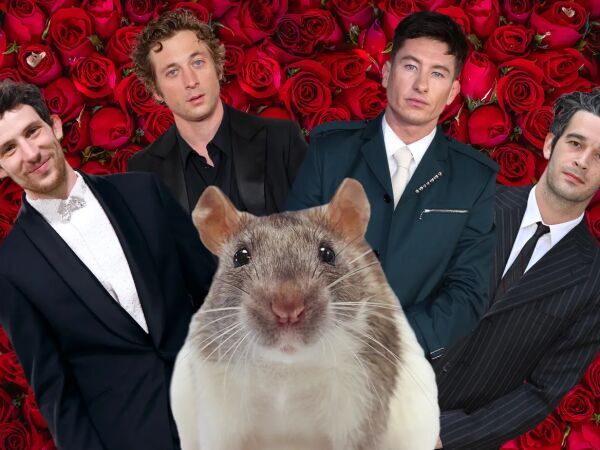
Are You Starting To Think The Rat From Flushed Away is Attractive?: The Rise of The 'Rodent Boyfriend'
Juno breaks down the bizarre trend of the 'Rat Men' taking over the internet.
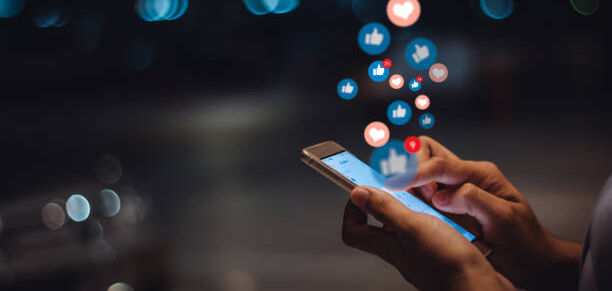
I am going to die on this hill: Social media is a gigantic source of dopamine farming. Videos with punchy hooks or trendy audio are posted with every intention of gaining your attention within three seconds. Same with memes showing extreme situations or reactions; cursed analogue horror vlogs you shouldn’t be watching at night are everywhere. Whether it’s doomscrolling TikTok or exploring your Instagram feed, most of the content we consume is directly reinforced by our own interests and hobbies. Interests that feed complicated algorithms that record your every tap, allowing platforms to micromanage your feed and provide better, more “curated” content. But why?
I was a firm believer in digital curation, encouraging all my interactions to be monitored by some random AI algorithm. And for a while, it was going great, with most of the content I consumed relating more closely to my personal experiences, beliefs, and interests. Slowly but surely, I became more chronically online. Niche online memes that only some obscure rabbit hole could explain became a part of my daily vocabulary. References that no one without a screen time of 60 hours a week could understand were made without a second thought. Microtrends that vanished within a week became the norm. At that point, I believed I was too far gone, chronically online, whilst real life became mundane.
In my head, social media had replaced life. If it weren’t for university or work, most of the time I was lying in bed deep into my 6th hour of bed rotting, scrolling TikTok, watching a comfort show (white noise), and mindlessly eating extremely salty chips. And while, in my head, swiping every couple of seconds to a new video to watch gave me a small hit of dopamine, my face and body language only screamed bored, tired, or tense. If you were to take a photo of me at that exact point, I would look like I had been locked in a hole with no light for decades. My eyes wouldn’t focus without my glasses, my body ached from the simplest movement, and the mere thought of switching my phone off to go to sleep would scare me because “what if I miss out on something important?” or “what’s the latest trend?” And so 12 am becomes 4 am, and all of a sudden the sun is now peaking through the curtains, and the room is no longer dark. And you finally decide to go to sleep at 7 am & wake up at 4 pm ready to do it all again.
For months, this is what my life looked like. The inability to do anything but stay on my phone, afraid of missing out on the newest topic, trend, or audio, controlled me. Life became one constant cycle. If I weren’t on my phone, there was no point in trying to find joy in life. For a period, the only “happiness” I had was from the internet. Life had become redundant and felt wasted. Yet each time I tried something new, something to try and switch up the pace, old habits came back in full force after only a few days.
That is, up until recently, when one blisteringly hot January night made me realise just how bad it had gotten. My body felt like a brick and a pang for water, making me remember how incredibly dehydrated I was. I flicked the light on, and the sudden brightness was like a flashbang, my already blurry vision not aiding in my arduous trek to the fridge. Whilst frantically rubbing my eyes, I walked past the mirror and stopped. I peered into my reflection, carefully measuring how far my dark circles had grown. This is when I realised I had to lock in: this cycle was only doing me harm, not good. I finally got some water in and forced myself to switch off and go to sleep. It was from that hot summer’s night that I slowly began changing my habits.
These days, doomscrolling has eased significantly, and my sleep schedule is finally aligning (though the dark circles around my eyes will never disappear). This is because of my behaviour change. I try to keep myself busy by becoming more active, trying more new things, setting a time to go to sleep and finding alternatives to massive doomscroll sessions, like listening to music or watching television shows instead. Whilst these may not be the best ways to minimise the dependency on social media for a quick dopamine fix, they have certainly helped me reduce my screen time considerably.
This time last year, my TikTok screen time alone averaged 7 hours a day; now I’m averaging 2. I’ve also noticed that, especially in the mornings and when I’m tired, not doomscrolling on my phone makes me more aware of my surroundings and more attuned to my body. When lying in bed, I fall asleep much faster now that I've cut back on my screen time, and I am not straining my brain to stay awake. On the bus, instead of scrolling on my phone, I stare out the window and take in the scenery; you see a lot of things you might not usually notice! I believe that by making these small changes, the dopamine I had been constantly craving from watching short-form media began to fade, and I felt much calmer and more rested than before.
This is what has helped me so far. Still, there are plenty of other things to try as well: apps like Opal to manually reduce screen-time on specific apps, wellbeing activities like journaling or scrap-booking, picking up new hobbies like colouring in or rockclimbing (don’t knock it till you try it), or even just having dedicated devices to specific needs - I’ve actually done this. It's worked really well for me.
So next time you’re on the bus, walking somewhere or doing some chores, think about whether you want to scroll on your phone or maybe try putting it away. See how long you can go before you need that quick dopamine fix. Maybe you’ll find that, just like me, you don't need to see what the next TikTok will be; you need to see the world in front of you.
Alan is a third-year Psychology student. He enjoys music, walks & clothes. You can usually find him writing lecture notes or on his phone.
Madeline Kahl
Ineke Jones
Juno breaks down the bizarre trend of the 'Rat Men' taking over the internet.
Eloise goes down memory lane to recount some of the best and most iconic Aussie Ads that are etched in all our memories.
Alexa ranks our the childhood cult classic, Papa's Pizzeria games.