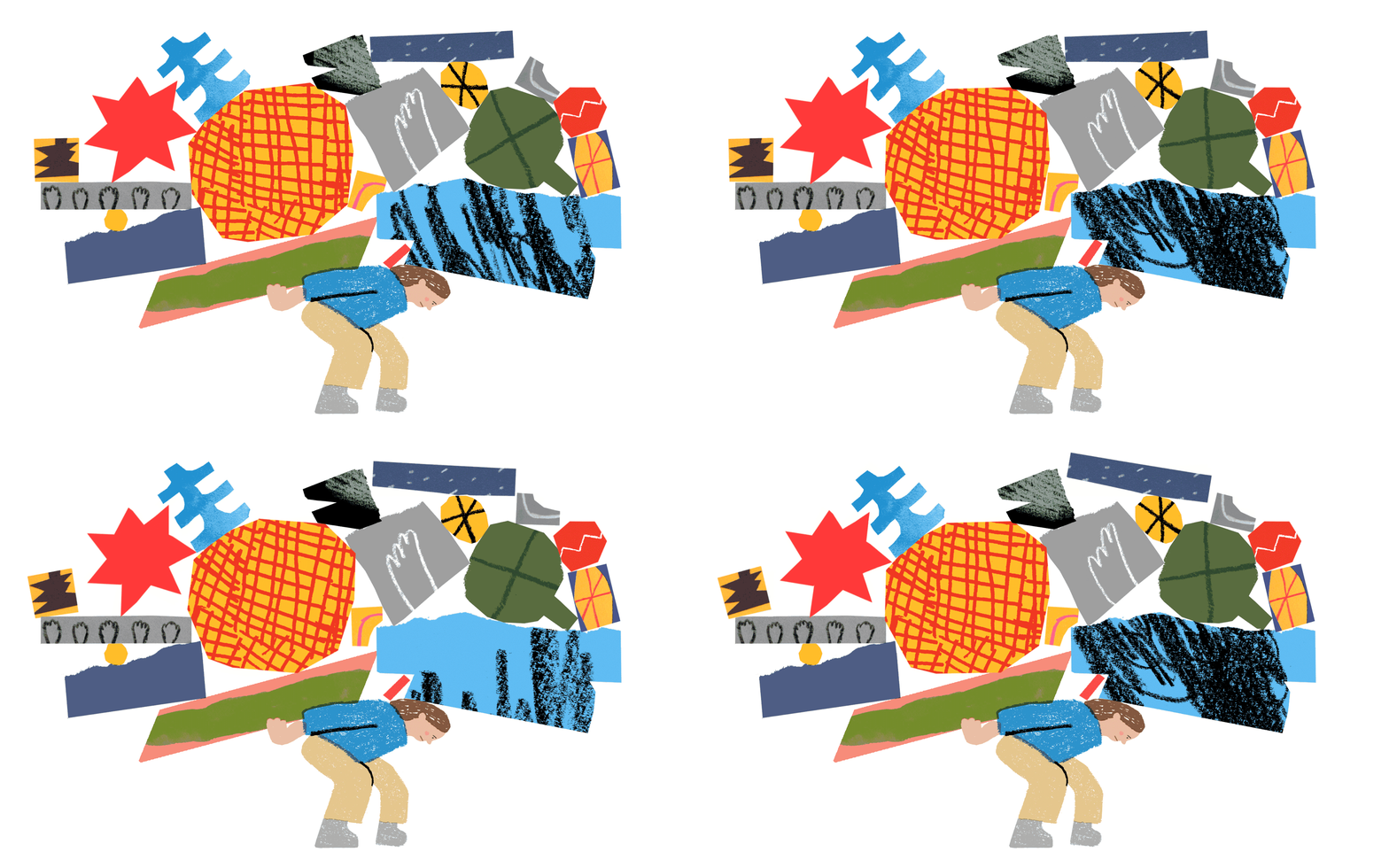
Whether it’s nobler in the mind to suffer the anxiety of impending deadlines or to take arms against a sea of distractions, procrastinate, and by doing so, delay them. Every student has asked themselves this question at least once, usually at 3 a.m. when you’re halfway through the fourth season of Bridgerton, but that’s besides the point. We all know the drill: the task ahead feels monumental, the pressure to make the perfect decision is overwhelming, and somehow, despite knowing you’ll regret it, you put it off anyway.
But why? Why do we procrastinate when we know we’ll pay for it later? It’s not laziness per se, it’s something far more psychological: the Paradox of Choice.
In a world where we’re constantly flooded with options, the more decisions we have to make, the harder it becomes to actually make one. You might think that having endless ways to approach a project would be freeing, but in reality, it’s a recipe for paralysis. As students, we’re bombarded with choices about how to structure our assignments, which research to dive into, and what methodology to use. Each option adds layers of complexity to what might otherwise be a simple task. This is where the Paradox of Choice comes in, and why you’re now knee-deep in ChatGPT, asking it to generate sources for you.
Let’s try to build a bridge for an engineering assignment. Sounds simple, right? Pick a material, get the dimensions, and calculate the stress. But, no. That would be too easy. Instead, I found myself faced with a seemingly endless list of choices. Steel or concrete? Pre-tensioned or post-tensioned? How many cross beams? What kind of foundation? Should I make it aesthetic? Should I make it practical? Should I make it both? It’s like standing in a buffet line with too many options, thinking, “I’ll just take a bit of everything,” only to realise you’ve piled so much on your plate that it’s physically impossible to eat it all