You are influenced by a lot of fairy tales, Korean fairy tales, folklore, and stories like that. Is there any one fairy tale that influences you the most, or even just a favourite from when you were little?
Uh oh. There are so many!
As I get to talk about these things more often, I am rediscovering fairy tales because I go back to reading them to remind myself, and I rediscover a new favourite.
These days, my newer favourite is this story from the 7th century (or 6th) when Buddhism was just entering Korea. There's no title really, but the title that the more modern people gave it is ‘Shoot the Instrument Cover’. So, there's this traditional stringed musical instrument, and they used to put it in a cover and have it stand against a wall. It's about 6 feet tall, you lie it down on the ground when you play it, but when you're not using it, you lean it against the wall. Theoretically, it's about a human’s size; the cover could fit a human being.
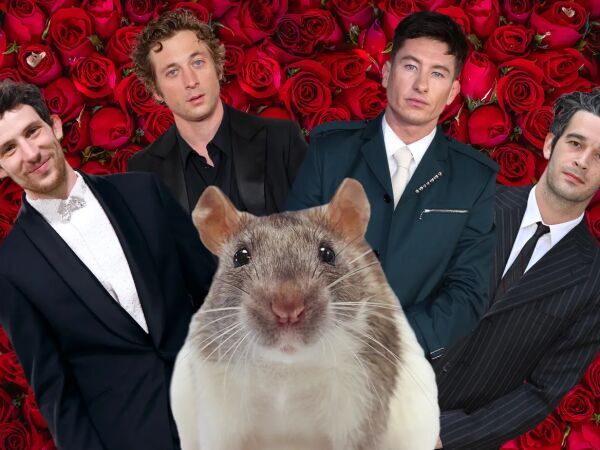
The story begins with a talking rat. The talking rat is yelling, “Follow the crow, follow the crow!” The king is given the news that there's a talking rat in the capital city, and he is yelling to follow a crow. So, he sends two of his best men to follow the crow. And like – [laughs] this rat is running around, saying “follow the crow, follow the crow.” So they did, and in the middle of following the crow, they saw these two pigs fighting, like human beings, beating each other up.
Yeah, it’s funny! So, they get distracted, and the crow ends up flying away, and they kind of don’t know what to do besides go back and report to the King. On the way back, they meet this strange old guy who says to shoot the musical instrument’s cover. So they're even more confused, you know, and this guy keeps saying this is really important. He says, “You have to tell the king that he has to shoot the musical instrument’s cover”. So, they returned with that message. And the king is also confused, so he asks the royal astrologer – because back then, they used to have these real fortune tellers in the castle – and the fortune teller said it means that if you shoot that musical instrument, there will be two people who are dead, but if you don't, there will be one person who is going to be dead. But that one person is more important than the two people. So the king decides, well, I'm the most important person in the world, clearly, so I'm gonna shoot that cover.
So, he brings his archer and shoots it, and it turns out that – it's a little misogynistic here – his queen was seeing a lover, and they were having an affair inside that cover, they were holding each other in there, and they were shot to death.
I don't like the misogynistic part. But I do like how this story is so fast-paced, action-packed, and confusing to everybody. It has a very, uh, unexpected ending. And I like that structure. I want to try that. Not the misogynistic part, but I do like illicit love affairs, and I like these confusing stories. So, yeah, that is my new favourite. That was, I think, one of the most ‘spicy’ stories in the old history books from the 6th century.
It sounds absurdist, almost. All this weird, confusing stuff in old fairy tales.
Even though this is a Korean story, I've also studied East Slavic literature – so Belarus and Ukraine, and what is now Russia, share old stories from before the 12th century. They have the same roots; they have similar structures.
They have all these absurd events written in a very serious manner, as though they actually happened alongside realistic, plausible events such as wars, droughts, and good and bad harvests. There are very realistic events, like peace talks among feuding brothers, and then there’s some sorcerer coming along, right, [laughs], and there's now a bad harvest, and then, enter some legendary thief, and then suddenly the war ends. I have no idea what's going on, and there's no further explanation!
So, there was this similar worldview among people before a certain era that always blurred the line between the real and the magical, and I just love that. I really love it.
On that note, as a previous university lecturer yourself, how would you feel about your novel potentially being required reading or analysed?
[Looks around nervously] I mean, I would like to have a talk with the teacher. Like – what are you thinking? Read Dostoevsky! What is the matter with you? It’d be a stern conversation.
I think it is important to read contemporary authors, though, right?
There's Han Kang! She won the Nobel Prize, read Han Kang! I love her; her work is wonderful. I mean, I consider myself a horror writer. I write genre literature for fun, and it should be read for fun. It should not be required; some of those things are torturous. People should not torture their students with my book. Like, torture them with some other book!
Oh, for sure. There are a lot of stereotypes about Russian literature that are really hard to get. And a lot of those are required readings.
Yeah, they kind of are. Dostoevsky is kind of like that because he was a gambling addict, and he was in all kinds of trouble, money troubles, all his life. So whenever he was writing, he needed the royalties. He had to write as fast as possible and publish just as fast. He’ll kind of open up his brain and pour everything into his work. So some of his sentences are really rushed, and some of the ideas – look, they are brilliant, but not very well thought through. But still, he’s great. The culture and history of that entire region are so different from those of the West or other English-speaking countries that sometimes they require long footnotes. Gets really tedious.
I think the stories they tell are very dependent on culture, and your stories have a very strong Korean cultural influence. Folklore, sometimes, the more politically charged share of it. Lately, there seems to have been an uptick in interest in South Korea.
In the West, yeah, because of that traitor. And the martial law! It's so embarrassing. He's a national embarrassment.
[Laughs] National embarrassment!! No, I-
International embarrassment!! [Puts her head in her hands]
I mean, I think interest has been building for a while, especially in popular culture. That movie Parasite swept the Oscars, and Squid Game is charting pretty much perpetually on Netflix.
And you know, I didn't see either.
You didn't see either!? No way!
[Laughs] My husband loves them, but I don't want to be influenced in the wrong way. If I like the story, I will for sure be influenced because they're speaking my own language and they're from my own culture; I’m like a sponge. When I'm reading something in English or Russian or Polish, I feel that distance, so I’ll have to interpret whatever it is and make that conscious effort to make it my own. But when it is my own language and culture, influence just seeps in before I know it, and it can be very scary how I subconsciously recall certain words or scenes from Korean movies, Korean books.
I had this Russian professor in grad school. She was a great teacher. She could recite pages and pages of Tolstoy’s War and Peace, and I was in awe every time. And now I think that maybe it's because it's her own language. For me, it would take about 20 to 30 times more of an effort than it would a native Russian speaker. Maybe she feels some kind of commonality or sympathy towards the author or the book. And that makes it seep into you. Not that she’s not great, she was still great.
How do you think Korean sci-fi and horror differ from those in other cultures, like the West and Eastern Europe? Have you noticed substantial differences?
Honestly, you can't really lump them all together. But when it comes to American science fiction and Russian Soviet science fiction, much of it blossomed because of the Cold War. A lot of Soviet science fiction was state-sponsored and encouraged by the state, so there was pro-Soviet and anti Soviet. But American science fiction was just an absolute boom, and became very popular, especially after the televised moon landing. So science became popular, and science fiction became popular too.
I heard a Korean critic and scholar of Korean science fiction state that Korean science fiction is more introspective. It is more social criticism and less of a theme of space opera and planetary invasion because, well, Korea doesn't have a history of invading and colonising other countries. We don't embellish it or pursue it as some great goal.
And South Korea is an especially technology-praising, small country. So when one person does something, everyone else follows suit. Like the current president, he's all into AI. Suddenly, everybody’s praising AI. There are some perks to it, too, like high-speed Internet everywhere and almost everyone in Korea having a smartphone. So the flip side is that everybody can, at least, feel how technology is influencing our lives.
If you don't have a smartphone, you wouldn’t be able to get important notifications from your local government or the national central government. And it's ridiculous because everybody should get those notifications – at least by mail – but you have to have a smartphone and a certain type of messenger. So the government just assumes that everybody has a smartphone and can operate it.
But my mother-in-law, for example, can only make and receive calls. She doesn't use those apps. So when there's news, she’ll hear the announcements second-hand, and then I have to inform her. So we Koreans are leaving certain people out of that rat race very actively, mean-spiritedly, and that is very disrespectful. And that is one of the things the Korean science fiction writers are focusing on. Because we will eventually get older, and if our society is moving in this direction, what's going to happen to us when we are old and frail? If robots are going to do end-of-life care, then what's gonna happen to human relations? What are the children and grandchildren gonna think, and how are they gonna react to the robot's decision? And that’s a real short story that won the Korea Science Fiction Literature Prize.